Takeoff and initial climb
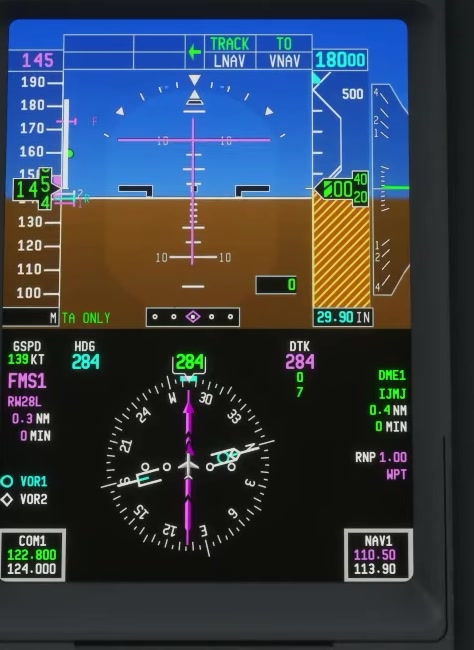
Check the flight modes
Before moving, press the TOGA button on a thrust lever and confirm TO and ROLL on the PFD FMA. Arm the autothrottle separately with the A/T button and check its indication. Set and verify the cleared altitude.
Set thrust
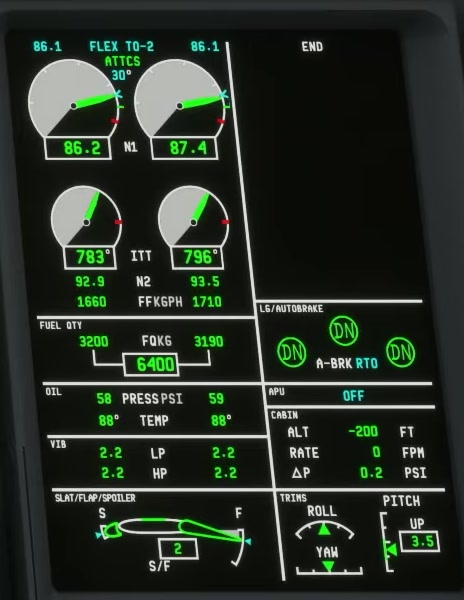
In the FSS example, stabilise both engines at 40% N1, then advance the thrust levers to the TO/GA detent. FSS describes autothrottle taking over at 50% N1. Monitor both engines on EICAS.
Monitor the roll
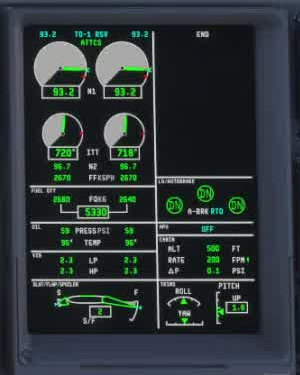
Maintain directional control and verify that speed and engine indications develop as expected. Use the applicable rejected-takeoff briefing if the situation requires it.
Rotate at VR
Use the calculated rotation speed and follow the displayed takeoff guidance. Monitor the aircraft attitude and actual path.
Confirm the climb
After positive climb, select the gear up. When the gear indicators are displayed, FSS describes white UP labels as up and locked; check all three.
Watch the FMA
Check lateral and vertical captures separately. Confirm that the guidance and aircraft response match the departure clearance.
Accelerate and clean up
At the acceleration point, manage thrust and speed. Retract the flaps on schedule and check that the surfaces reach UP. Complete the after-takeoff checklist: FSS lists gear UP, flaps UP and APU OFF. Before shutting the APU down, confirm the remaining electrical and pneumatic sources are suitable.
During retraction, watch the actual slat/flap indication as well as the lever. A lever moved to the next detent does not mean the surfaces have finished moving. Use the limit applicable to your variant and installed version, and monitor the speed trend until the surfaces reach the commanded position. [10] [9] [119]