Choosing the E2
On 17 June 2013, Embraer returned to the Paris Air Show with another family announcement. The E2 programme comprised three aircraft: the E190-E2 was scheduled to enter service in 2018, the E195-E2 in 2019 and the E175-E2 in 2020. There would be no E170-E2. Embraer retained the E190’s basic passenger capacity, added one row to the proposed E175-E2 and three to the E195-E2. In the layouts described at launch, those aircraft accommodated up to eighty-eight, 106 and 132 passengers respectively. New wings, geared turbofans, revised avionics and full fly-by-wire controls were intended to reduce fuel use and operating costs while retaining family continuity for customers. The smaller aircraft would receive Pratt & Whitney’s PW1700G; the two larger models would use the PW1900G. The chosen programme therefore combined an unchanged middle fuselage size with stretches at either end, concentrating its greatest seating growth in the largest aircraft.
Several major decisions had already been made before the announcement in Paris. In February, Honeywell disclosed an agreement valued at US$2.8 billion over its lifetime to provide Primus Epic avionics for the second generation. The supplier reported nine million flight hours of experience on the existing E-Jets. Its software-based architecture offered a route for adding navigation, communication and air-traffic-management functions while keeping continuity with equipment already familiar to operators. Synthetic vision and advanced flight management formed part of the offering. The commitment connected the new cockpit to a supplier relationship extending back twenty-five years. Embraer was already selecting the electronic architecture through which pilots would see and manage the aircraft while the wider programme still awaited its formal public launch.38
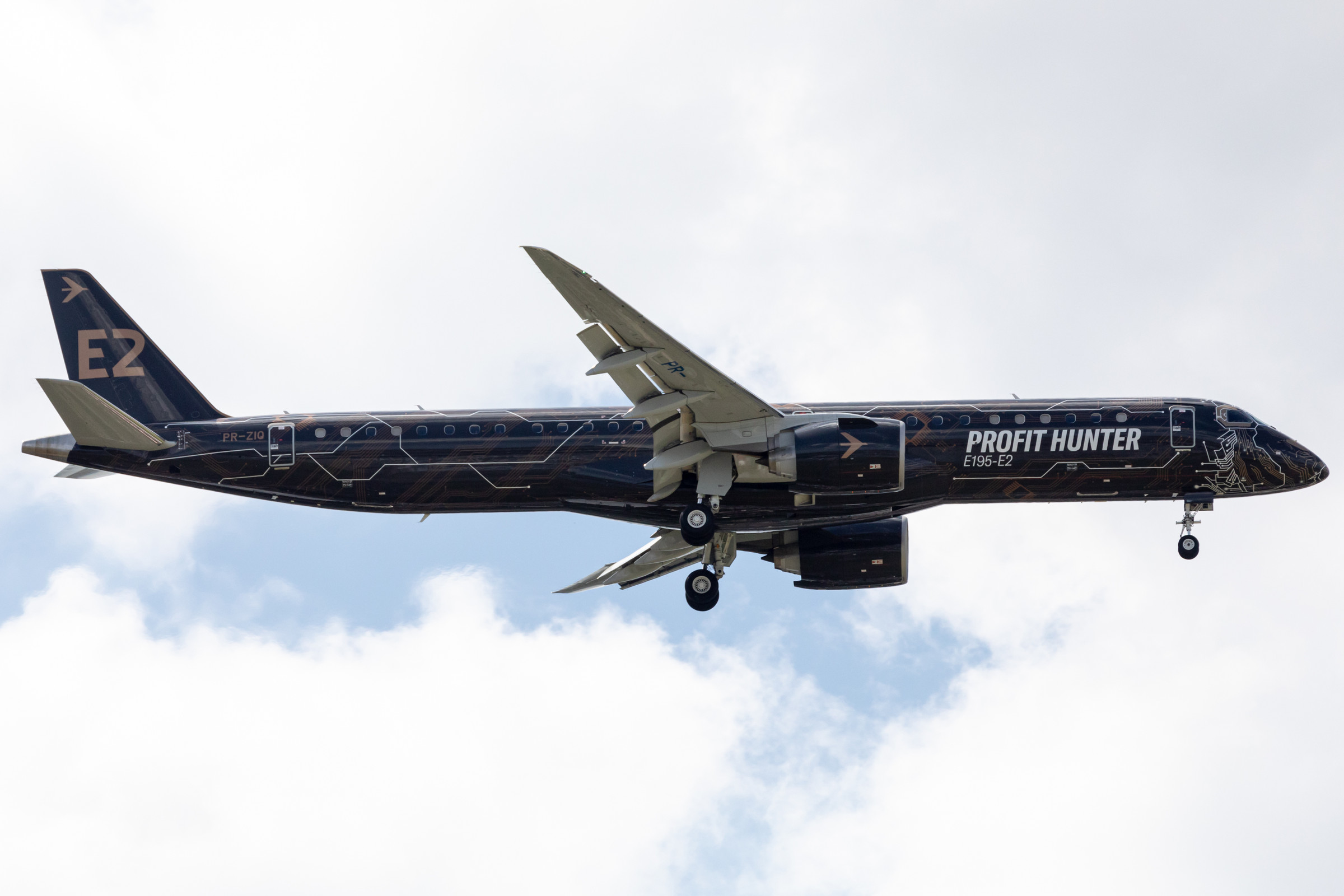
In May 2013, Embraer named further systems suppliers. Moog would supply flight-control computers and hydraulic actuators for the primary surfaces and spoilers. Rockwell Collins would provide the horizontal-stabiliser control system, including electronic controls and mechanical actuators. Liebherr’s high-lift package combined the controls, actuators, transmission unit, torque tubes and sensors that would move the flaps and slats. The same supplier also received the air-management system, covering engine bleed air, ice protection, air conditioning and pressurisation. These contracts divided the work at the interfaces where the new airframe would be most demanding: between a pilot’s command and a moving control surface, between an engine and the cabin’s air supply, and between wing geometry in cruise and the configuration needed near the runway. Each package had to function within an aircraft whose wings, engines and control laws were all changing together.<sup class="citation"><a href="/sources/#source-39">39</a></sup> The existing E175 continued to develop alongside the E2. On 12 March 2014, Embraer rolled out the first production example of an enhanced version with a new wingtip, systems optimisation and other aerodynamic refinements. The company reported fuel consumption 6.4 per cent below that of the original E175, exceeding the earlier target of up to five per cent. The reported saving combined the new wingtip with the other improvements. Airlines ordering the first-generation model could therefore receive a more efficient aircraft during the years needed to develop the E2. Embraer had two streams of engineering work under way: changes that could reach the production line quickly and a new generation whose engines, structures and controls required a complete certification campaign. The enhanced E175 became a visibly different member of the original family while remaining part of its established production and support system.<sup class="citation"><a href="/sources/#source-40">40</a></sup> By June 2015, parts for the first E190-E2 were converging on São José dos Campos. Embraer’s Évora plant in Portugal had completed wing and centre-fuselage subassemblies. Botucatu produced wing components, sections of the central fuselage and work on the forward fuselage. Aernnova in Spain was finishing the vertical tail and would also supply the horizontal tail. Latécoère’s Czech operation had shipped baggage doors. In the United States, Triumph was assembling rear fuselage sections and supplying the rudder and elevator. Embraer’s Eleb subsidiary was preparing the first landing-gear sets. The allocation brought most large fuselage sections within Embraer while retaining a multinational group of suppliers. At Eugênio de Melo, test rigs were already exercising systems and the flight-control laws and code developed by Embraer itself. The physical aircraft and its control software were advancing at separate sites towards the same first flight.41
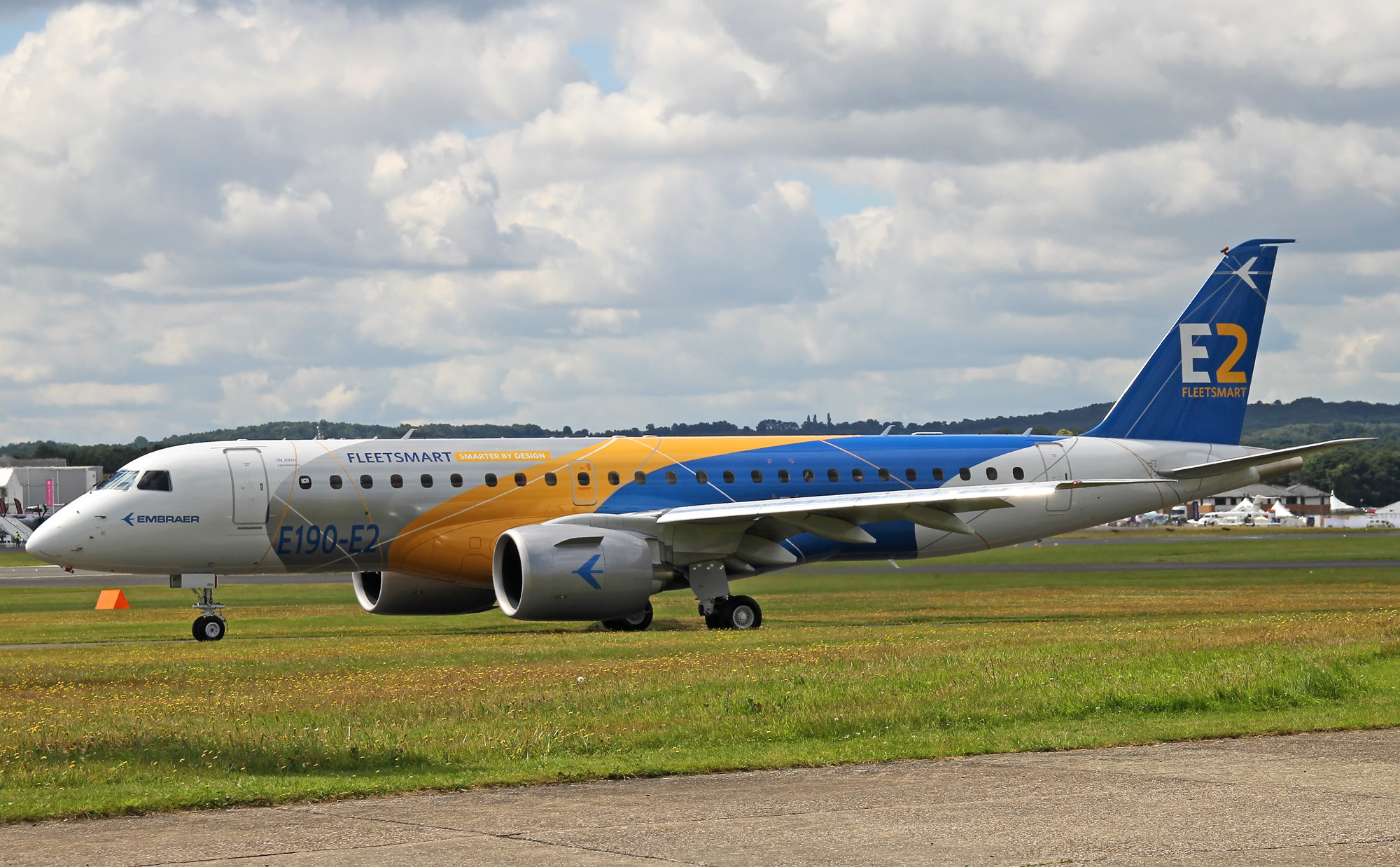
The E190-E2 rolled out on 25 February 2016. Embraer described a US$1.7 billion programme and an order position containing 267 firm commitments, with another 373 options and purchase rights. The aircraft presented in São José dos Campos was the first of four intended for the E190-E2 certification campaign; two more were planned for the E195-E2 and three for the E175-E2. At rollout, the first flight was still scheduled for the second half of the year. The E190-E2 kept the middle aircraft’s capacity, with layouts then advertised at ninety-seven seats in two classes or 106 in one. Its development resources were being spent on the wing, propulsion and systems around that cabin. Beyond the finished aircraft, the next members already existed as production plans, test allocations and supplier work, following it through the factory.