Fuel crossfeed operation
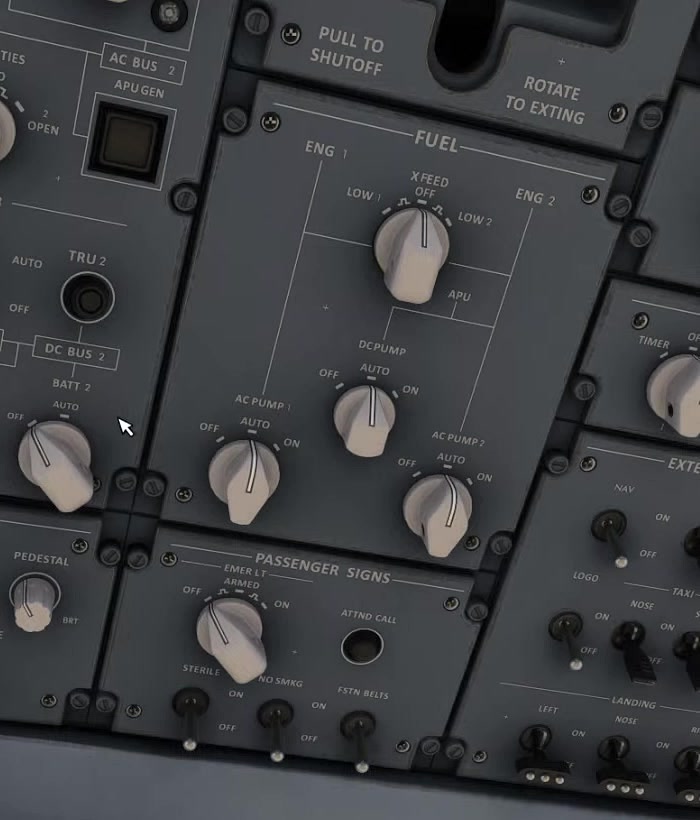
FSS labels its crossfeed positions for the low side. In the documented logic, the opposite wing tank becomes the source for both engines. This supplies the engines; it is not a command to transfer fuel between tanks.
Lower tank
Read the separate tank quantities carefully. Confirm that the apparent imbalance is real and that there are no other relevant alerts.
Understand LOW 1
Right tank feeds both sides.
Simplified flow path; not a procedure.
FSS says LOW 1 opens the crossfeed valve and automatically activates AC PUMP 2, so the right tank supplies both engines. The directional illustration shows the source side; it does not depict a switch position or fuel transfer between tanks.
Understand LOW 2
Left tank feeds both sides.
FSS says LOW 2 opens the crossfeed valve and automatically activates AC PUMP 1, so the left tank supplies both engines. The directional illustration shows the source side; it does not depict a switch position or fuel transfer between tanks.
Pump override
FSS says taking an associated AC pump selector out of AUTO overrides the automatic crossfeed pump command. Read the synoptic instead of assuming the selected knob position is the whole story. The photograph shows both selectors at AUTO in this parked example.
Crossfeed procedure
Use the procedure for the actual condition. The FSS limitations page specifies XFEED OFF for takeoff and landing. For an abnormal condition, follow its applicable procedure rather than treating this overview as a checklist. The photograph shows the selector at OFF on the ground.
Tank quantities
Watch both tank quantities on EICAS and check the FUEL synoptic for engine indications, valve and pump states. If behaviour differs from the FSS description, record the build and configuration.
Do not select crossfeed for a suspected fuel leak without using the applicable procedure. [110] [10]