The cockpit and the cabin
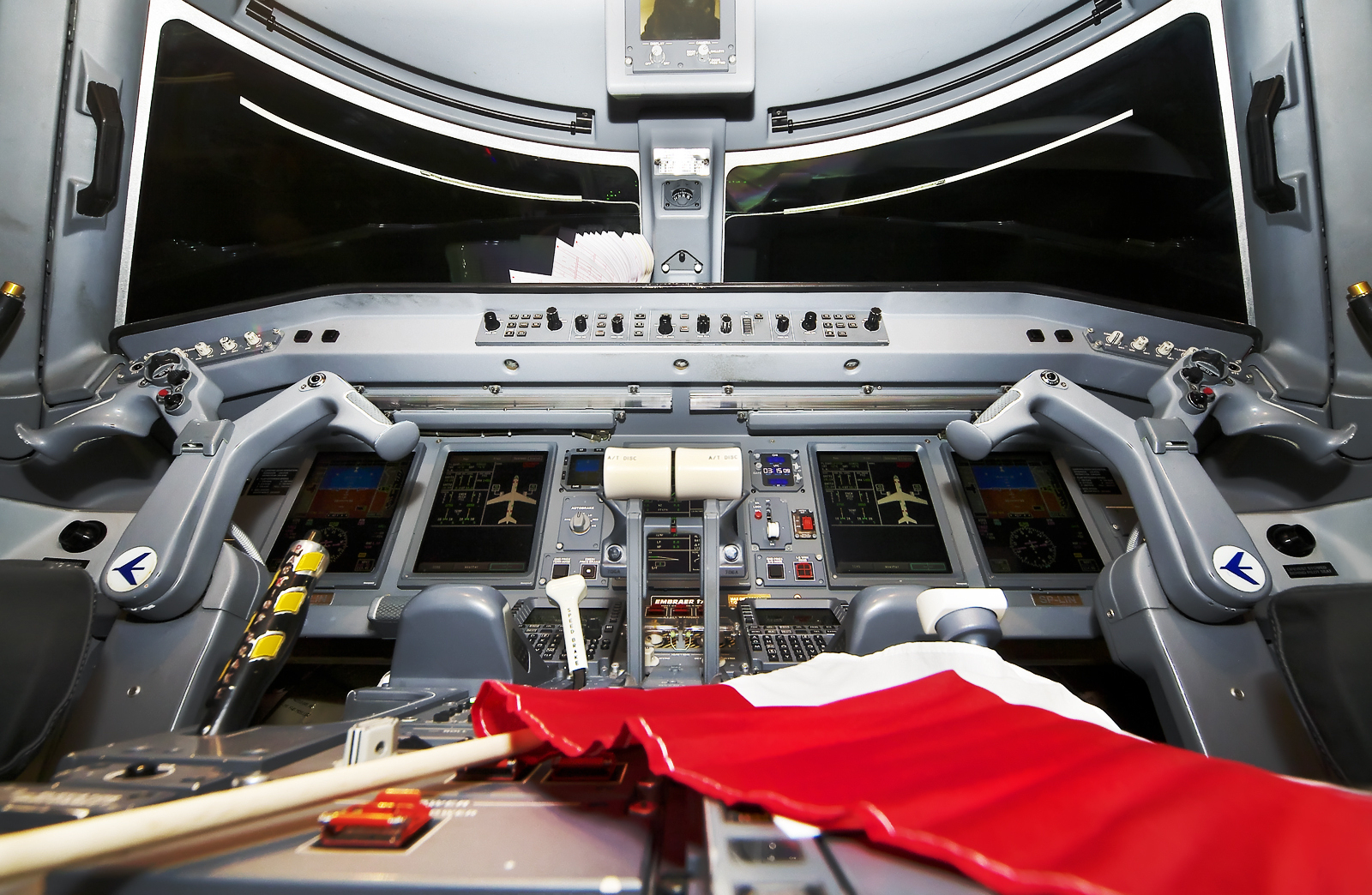
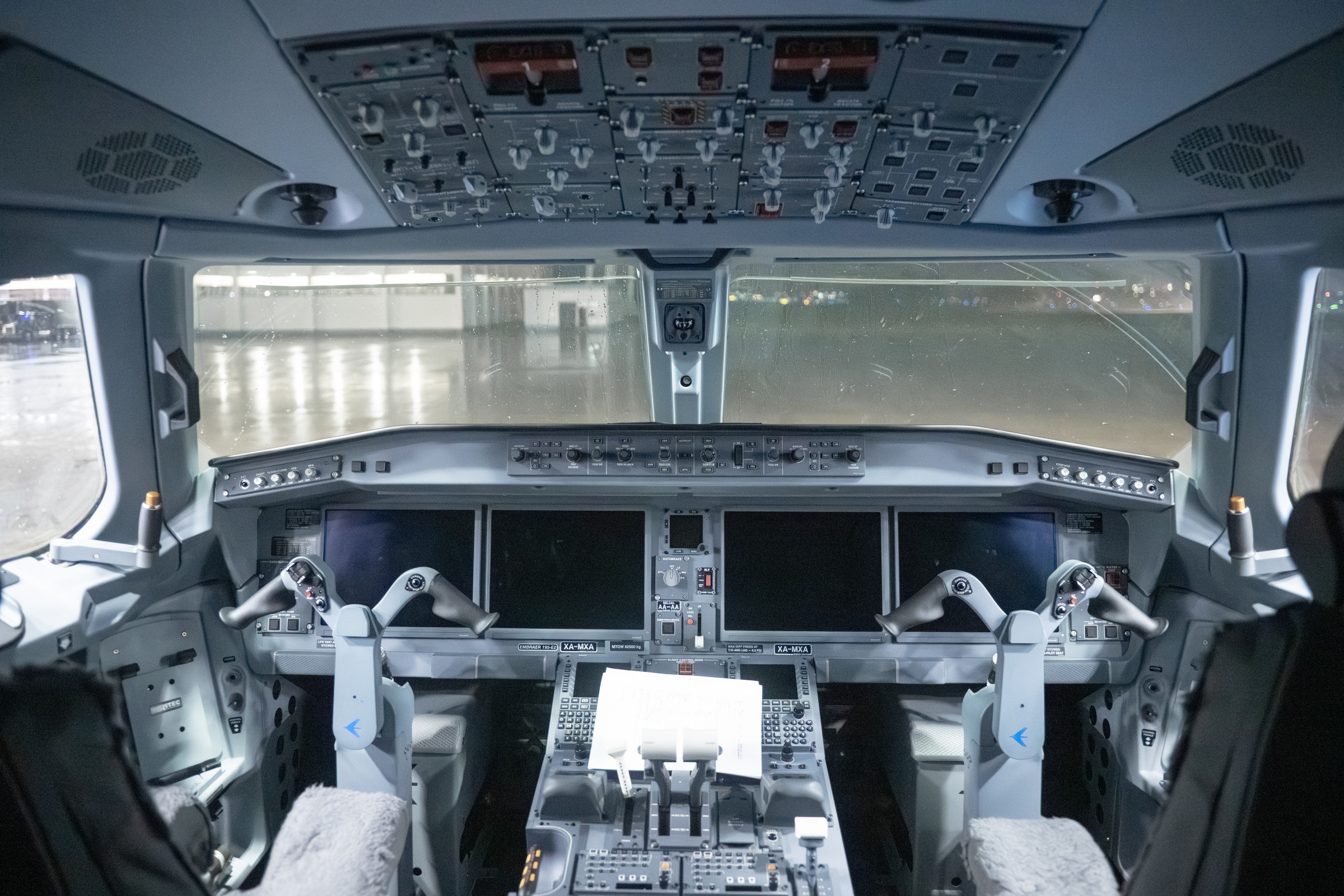
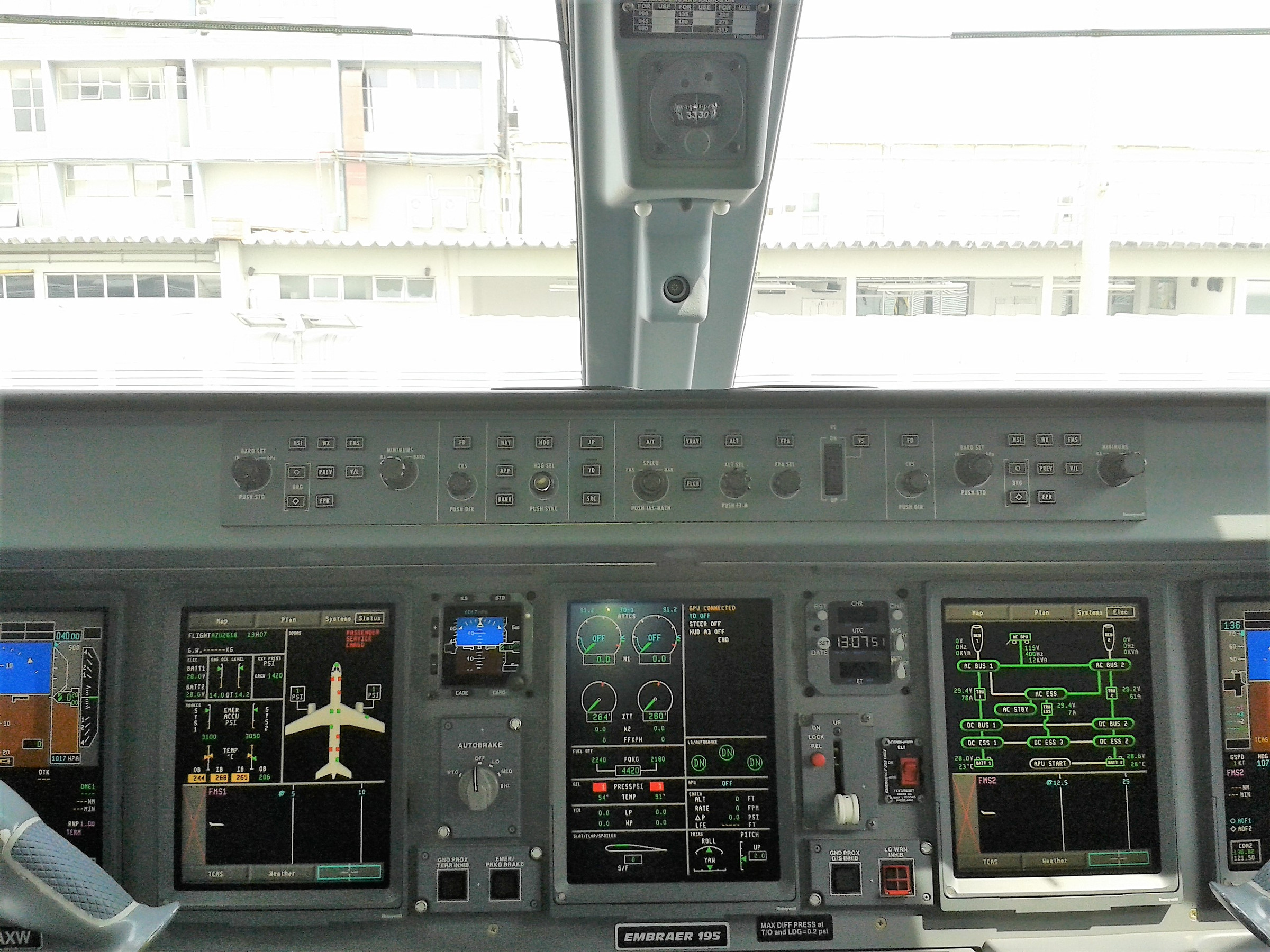
The E2 cockpit replaced the earlier aircraft’s five portrait-format, eight-by-ten-inch displays with four landscape screens measuring thirteen by ten inches. The larger displays supported multiple windows and revised arrangements for presenting information. Behind them, the flight controls gained closed-loop fly-by-wire operation on all three axes, including the ailerons, with new normal-mode protections and revised direct-mode behaviour. The changes were substantial enough to require specific transition training. Transport Canada’s 2023 evaluation set out a four-day E190-to-E190-E2 course: two days of ground instruction followed by two four-hour simulator sessions. The requirements linked the new display and control architecture to the way pilots learned the aircraft, while retaining a defined path from the earlier E190.
Moog’s control hardware extended across the E2 family. When the supplier marked the E175-E2’s first-flight programme in February 2020, it confirmed that the smallest aircraft used the same flight-control computers and hydraulic-actuator hardware as the E190-E2 and E195-E2. The equipment moved primary control surfaces, multifunction spoilers and ground spoilers. A longer fuselage or a different wing did not require Embraer to begin again with an entirely separate supplier system. Common hardware could be incorporated into each variant, with the aircraft’s own control integration determining how it behaved. That approach joined the smallest proposed E2 to the two larger aircraft through equipment beneath the skin, even where their engine installations and external dimensions differed.66
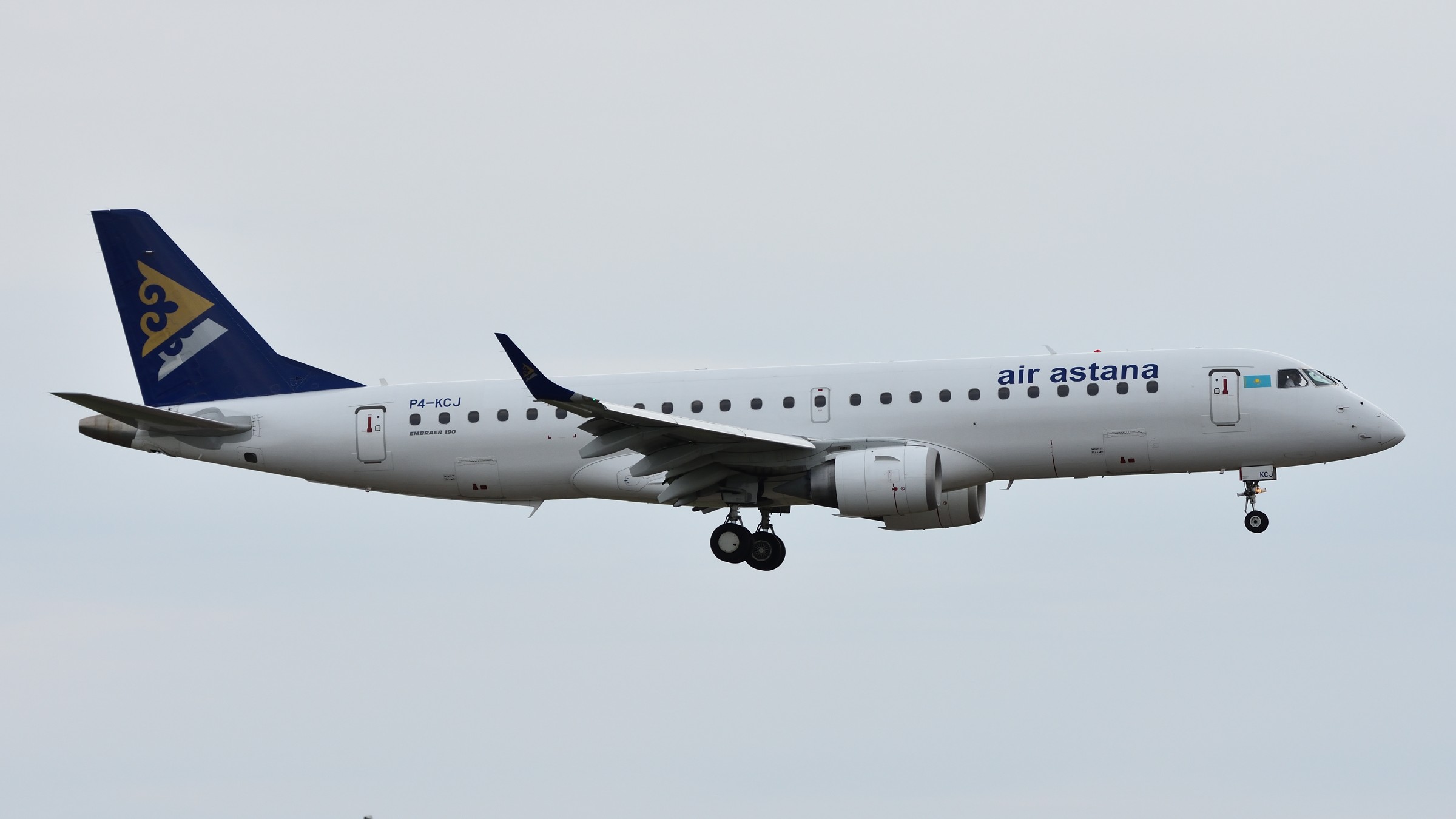
On 11 November 2018, the original E190’s cable-commanded ailerons were at the centre of an emergency over Portugal. Air Astana’s P4-KCJ departed Alverca after heavy maintenance at OGMA, carrying six people on a positioning flight towards Minsk. The aircraft responded abnormally to control inputs and repeatedly departed controlled flight. After almost two hours, the crew landed at Beja on the third approach, assisted by Portuguese F-16s and air traffic controllers. All aboard survived. GPIAAF’s final report identified incorrect installation of the aileron cables in both wings, followed by inadequate independent inspection, as the probable cause of the reversed aileron response and loss of control. The investigators also identified weaknesses in maintenance quality assurance and oversight, a design that permitted reversed cable installation, unclear manufacturer documentation and failure to detect the condition before departure. The crew recovered limited control as visual conditions improved, but normal roll response was never restored during the flight.67
credit]
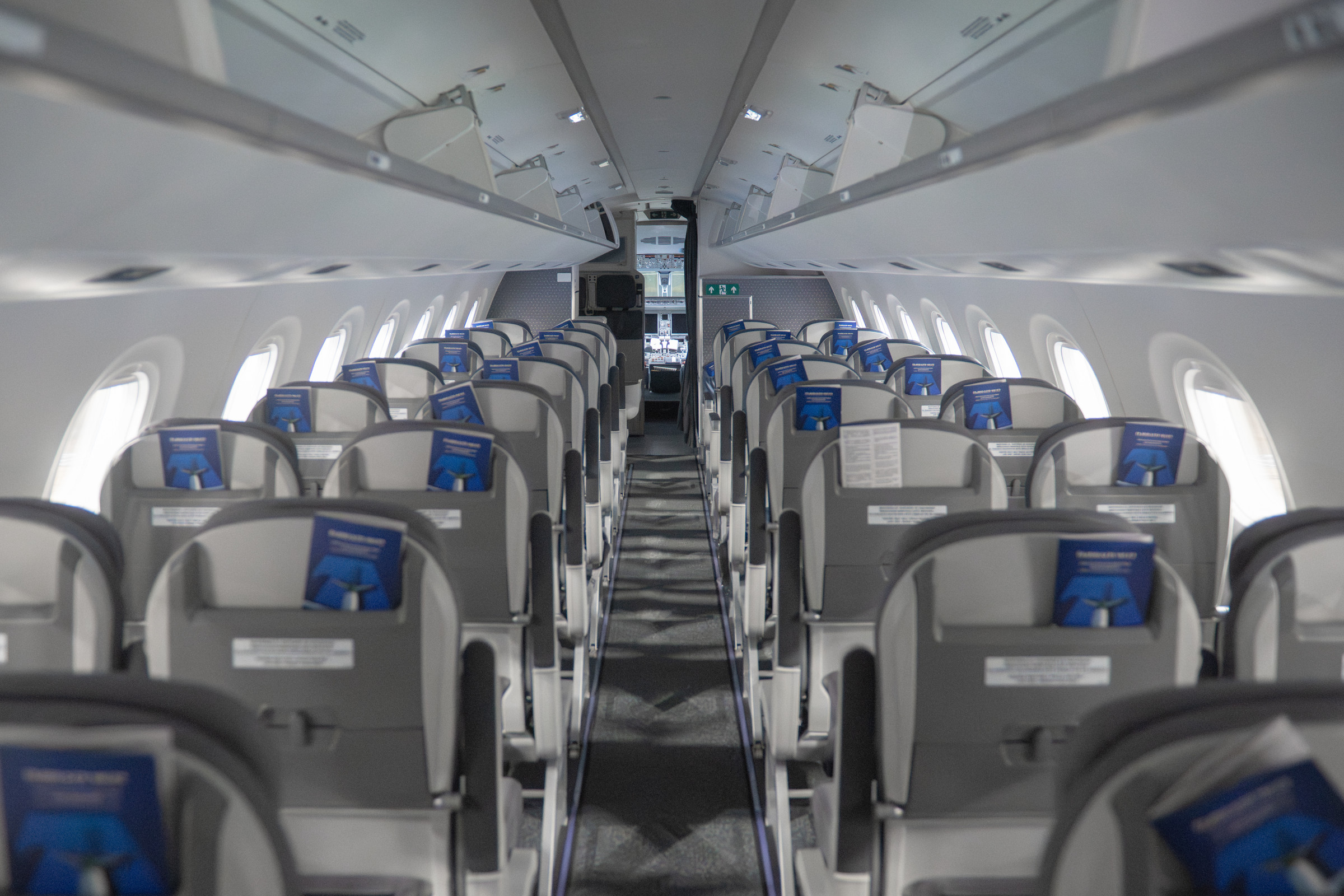
The passenger interior began with a separate design commission. On the day of the E2 launch in June 2013, PriestmanGoode announced its appointment to develop the cabin architecture and seating across all classes. The design studio had already worked with Embraer on the Lineage 1000 executive aircraft. The commercial commission covered the entire cabin, including sidewalls, overhead space and the seating arrangements. The brief had to accommodate airlines with different service patterns and cabin divisions, while remaining suitable for a family produced in several lengths. Embraer’s engineering team would work with the designers to turn that interior into components and installations that could be manufactured, fitted and maintained within the aircraft.
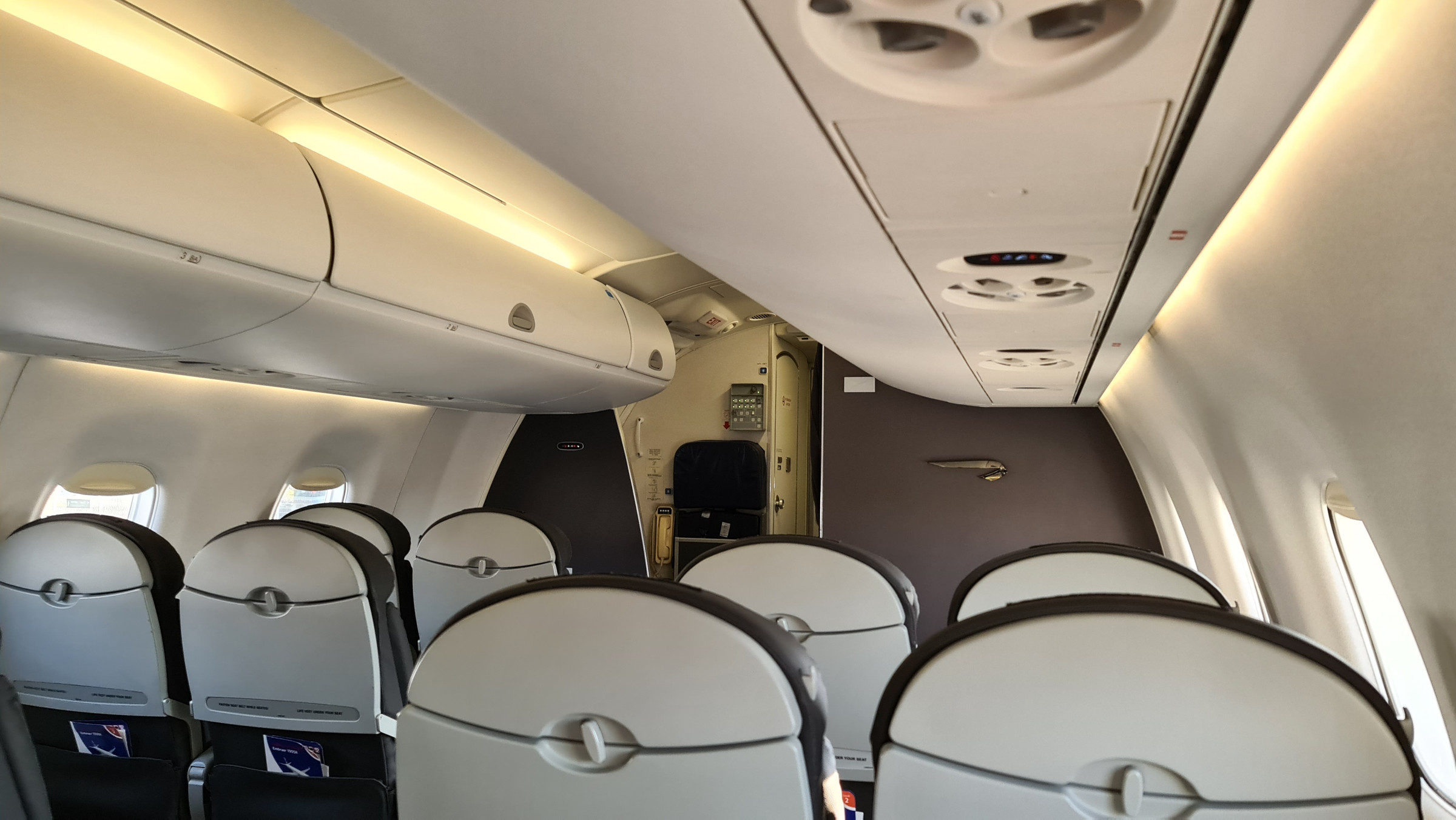
A full-size mock-up appeared at Farnborough in July 2014. PriestmanGoode placed individual passenger-service units above the seats so that each occupant could adjust lighting and airflow without reaching across a neighbour’s controls. The overhead bins were shaped into the ceiling and designed to accept standard cabin bags with their wheels facing inward. The proposed premium seat used a staggered arrangement compatible with the same seat-track positions as the economy section, allowing airlines to change the cabin division without introducing a separate bin layout. The design work extended to bin handles, galley latches and lavatory fittings. In the lavatory, moving the mirror backwards increased usable space and removed awkward recesses that could collect dirt. These details addressed the interior as equipment used repeatedly through boarding, flight, cleaning and reconfiguration. The mock-up offered airlines a configurable cabin; the particular seats and fittings installed would depend on the operator’s chosen arrangement.<sup class="citation"><a href="/sources/#source-69">69</a></sup> Air management ran behind those visible fittings. By the first E195-E2 delivery in September 2019, Liebherr’s integrated system had brought lightweight electro-pneumatic and mechanical components into service alongside its electronically controlled high-lift system and nosewheel-steering module. Cabin air, pressurisation and the movement of the wing’s high-lift surfaces belonged to different operating tasks, yet came through the same supplier’s programme. Liebherr also established support through its repair organisation and spares network. The cabin that passengers saw depended on systems distributed throughout the aircraft and on equipment that airline maintenance departments would need to service after delivery.<sup class="citation"><a href="/sources/#source-70">70</a></sup> Training equipment reproduced that interior as well as the flight deck. In December 2019, Lufthansa Aviation Training selected FlightSafety to supply an E2 full-flight simulator and cabin trainer for its Zurich centre. The planned FS1000 simulator incorporated Honeywell Primus Epic avionics, a collimated glass-mirror visual display and FlightSafety’s VITAL 1100 scene-generation system. The accompanying cabin trainer reproduced the main passenger door, an overwing exit, attendant’s seat, passenger seats, stowage bins and lighting. It gave cabin crews access to equipment they would handle directly, while pilots could learn the aircraft’s displays and systems in the simulator. FlightSafety’s package also included technician training, engineering support, a resident service representative and spare parts. Installation in Zurich was scheduled for 2020, with the devices available to FlightSafety instructors and other E2 operators as well as Lufthansa Aviation Training.<sup class="citation"><a href="/sources/#source-71">71</a></sup> On 27 October 2026, the FAA proposed special conditions for a further E195-E2 change: the Embraer Enhanced Takeoff System, or E2TS. Embraer had applied for the change in December 2021. The system would control pitch through rotation and the initial climb, together with bank angle, while the crew retained responsibility for following the runway centreline during the ground run. Automatic rotation introduced a different certification problem. Rules written around variations in a pilot’s handling would have to account for sensor inaccuracies and system tolerances. The proposed conditions addressed those deviations across the aircraft’s operating envelope. The FAA was accepting comments until 27 November; the document had not yet become a final set of special conditions.72, 73