Beyond fifty seats
At the Paris Air Show in June 1999, Crossair committed itself to an aircraft that Embraer had yet to build. The Swiss airline’s purchase brought together three sizes: forty ERJ 145s, thirty of the proposed seventy-seat ERJ 170 and thirty of the larger ERJ 190-200. Another hundred aircraft were covered by options across the models. The arrangement linked Embraer’s established fifty-seat jet to a new family reaching above a hundred seats. Brazil’s development bank, BNDES, supplied the financial machinery behind the sale. Through buyer’s credit, the bank would pay Embraer when aircraft were exported and delivered; the airline would repay the financing, secured against the aircraft. Crossair could commit to renewing its fleet before the new models existed, while Embraer gained a customer around which to organise a much larger engineering project. The bank identified Crossair as the first customer for the new family.
The aircraft took shape around a wider passenger cabin. Embraer chose a double-bubble fuselage cross-section accommodating two seats on either side of the aisle, with baggage carried below. Four main doors, at the front and rear, gave ground staff access from both ends. The engines moved beneath the wings. Airlines would be offered closely related aircraft at several capacities, sharing systems and components while using wing designs appropriate to their different sizes and weights. The arrangement allowed the cabin to grow from the E170 towards the E195 without requiring each version to begin again as an unrelated aircraft.24
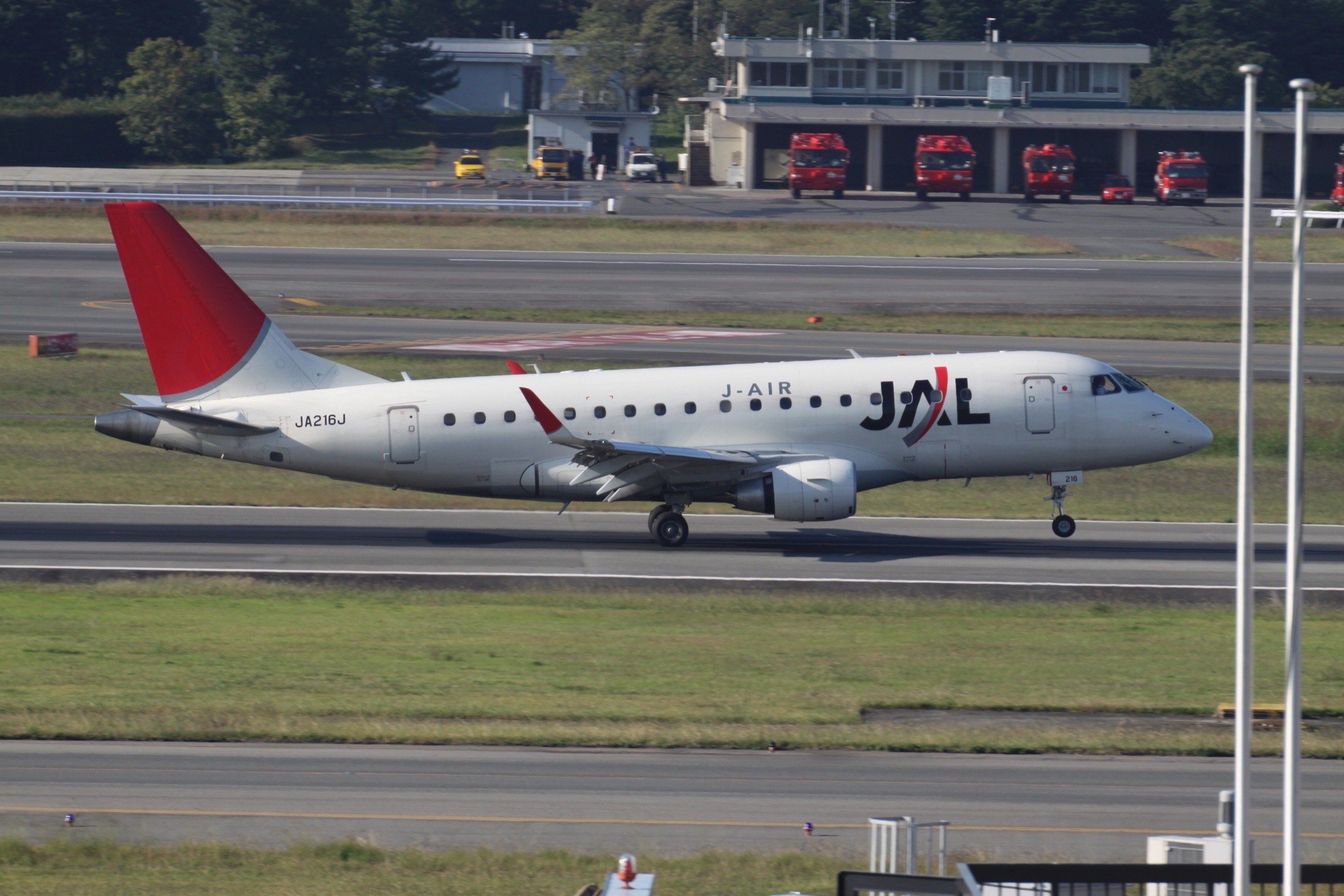
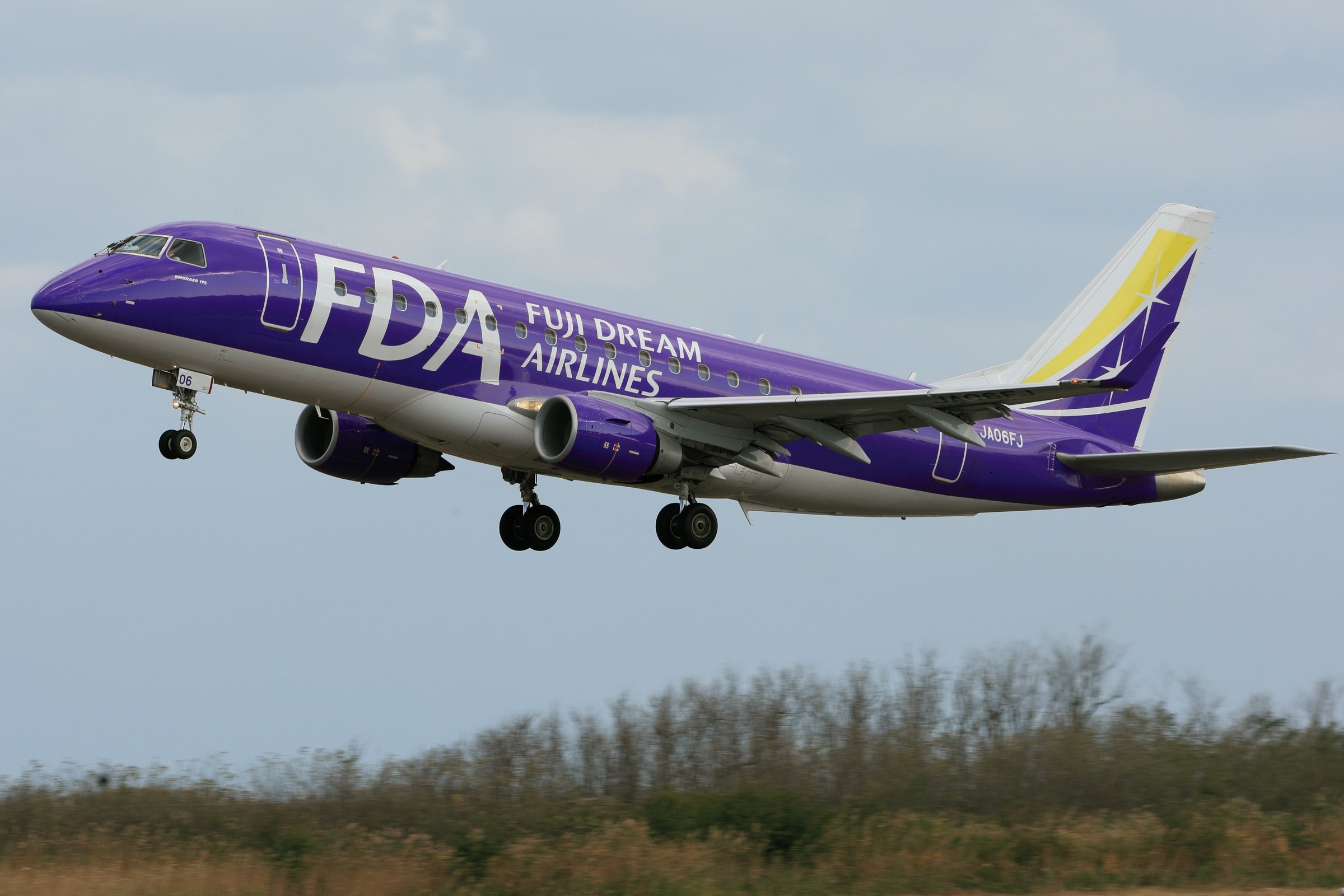
General Electric’s selection established another boundary between the smaller and larger models. The proposed ERJ 170 would use the CF34-8E, in the 14,000-pound thrust class, with an underwing installation developed for Embraer. GE planned extensive commonality with the CF34-8C1 and -8D then under development, including their turbomachinery and electronic engine control. The larger ERJ 190 required the CF34-10E, then described as an 18,000-pound thrust-class engine. Its proposed combination included a larger booster and fan and modified turbine components. Thus, from the announcement in Paris, the family contained two propulsion branches. Embraer could seek common equipment and operating practices across the aircraft while giving the heavier versions the additional thrust they required. GE’s schedules at that point anticipated engine certification during 2001 and 2002. Those dates belonged to a programme still taking shape; the aircraft, installations and engines would have to progress together through development.<sup class="citation"><a href="/sources/#source-25">25</a></sup> In São José dos Campos, the programme also changed the tools with which Embraer worked. The company opened a Virtual Reality Center in February 2000, enabling engineers to examine the position and integration of systems before physical assemblies existed. Maintenance access could be considered within the same digital environment. A knowledge-based engineering system gathered rules, restrictions and earlier design decisions for reuse. The first part for the new jet family was machined in July. Behind these visible steps stood an estimated development investment of US$850 million, shared with industrial partners. The company’s 2000 share offering in New York and São Paulo brought the programme into the international capital market. The new engineering equipment and production tooling had to be paid for during the years before the first deliveries.<sup class="citation"><a href="/sources/#source-26">26</a></sup> Kawasaki’s involvement gave that international structure a physical form. Its first contract with Embraer, signed in October 1999, covered major wing components for the E170. Deliveries from the Gifu works in Japan began in April 2001. As the larger aircraft progressed, Kawasaki took responsibility for the main wing box as well. It then planned a Brazilian plant at Gavião Peixoto, roughly 300 kilometres northwest of São Paulo, for final wing assembly. The company explained the choice in practical terms: lower production and transport costs, closer customer support and a stronger relationship with Embraer. Components could be developed and manufactured through the Japanese organisation, then brought together near the Brazilian aircraft programme. The new family was already drawing suppliers into Brazil, beyond the commercial relationship of shipping finished equipment to a distant assembly line.<sup class="citation"><a href="/sources/#source-27">27</a></sup> By the time the first E170 emerged on 29 October 2001, twenty-eight months had passed since the Paris launch. The ceremony in São José dos Campos took place only weeks after the attacks of 11 September had shaken the airline industry. Embraer presented the largest project it had yet undertaken: sixteen risk-sharing partners and twenty-two principal suppliers were involved. Honeywell, Hamilton Sundstrand, Parker and Liebherr supplied avionics and systems; Kawasaki, Sonaca, Latécoère and Gamesa contributed structures. C&D Aerospace joined Liebherr among suppliers establishing production in Brazil. The initial three-model proposal had become four: the seventy-seat E170, seventy-eight-seat E175, ninety-eight-seat E190 and 108-seat E195, using the layouts described at the time. The former ERJ 190-100 and ERJ 190-200 names had given way to E190 and E195. The aircraft outside the factory was the smallest member. The E175 stretch and the larger E190 and E195 remained in development behind it.28