Azul and LATAM
After JetBlue, David Neeleman returned to the hundred-seat idea in Brazil. Azul was founded on 3 January 2008 and began operations on 15 December with a passenger fleet of three Embraer E-Jets. Its opening capital supported a young fleet and an operating platform intended to grow. By May 2009, less than six months after launch, it had become Brazil’s third-largest domestic airline by market share, according to ANAC, Brazil’s civil aviation regulator. Expansion also came through acquisition. Azul acquired TRIP in 2012 and completed the integration of its activities by June 2014. Similar fleets helped the combination. The transaction brought together two networks and reinforced Azul’s presence beyond the largest trunk routes, giving the airline more places from which to gather passengers and more opportunities to connect them through its hubs.
Campinas was central to that model. Azul built its principal hub at Viracopos, about 100 kilometres from the city of São Paulo. By June 2017 it offered nonstop service from there to 52 Brazilian cities and accounted for 97 per cent of the airport’s daily domestic departures. The operation drew on the wider Campinas region and connecting traffic. Belo Horizonte and Recife supplied further connecting points. Across the network, Azul mixed E-Jets with smaller ATR turboprops and, later, Airbus aircraft. The different capacities let it combine markets of different sizes within one timetable. In its 2017 prospectus, the airline also identified bus travel as a competitor and argued that advance-purchase fares could attract passengers who otherwise travelled by road. Its fares and connections had to appeal both to existing air travellers and to people accustomed to long journeys by road.106
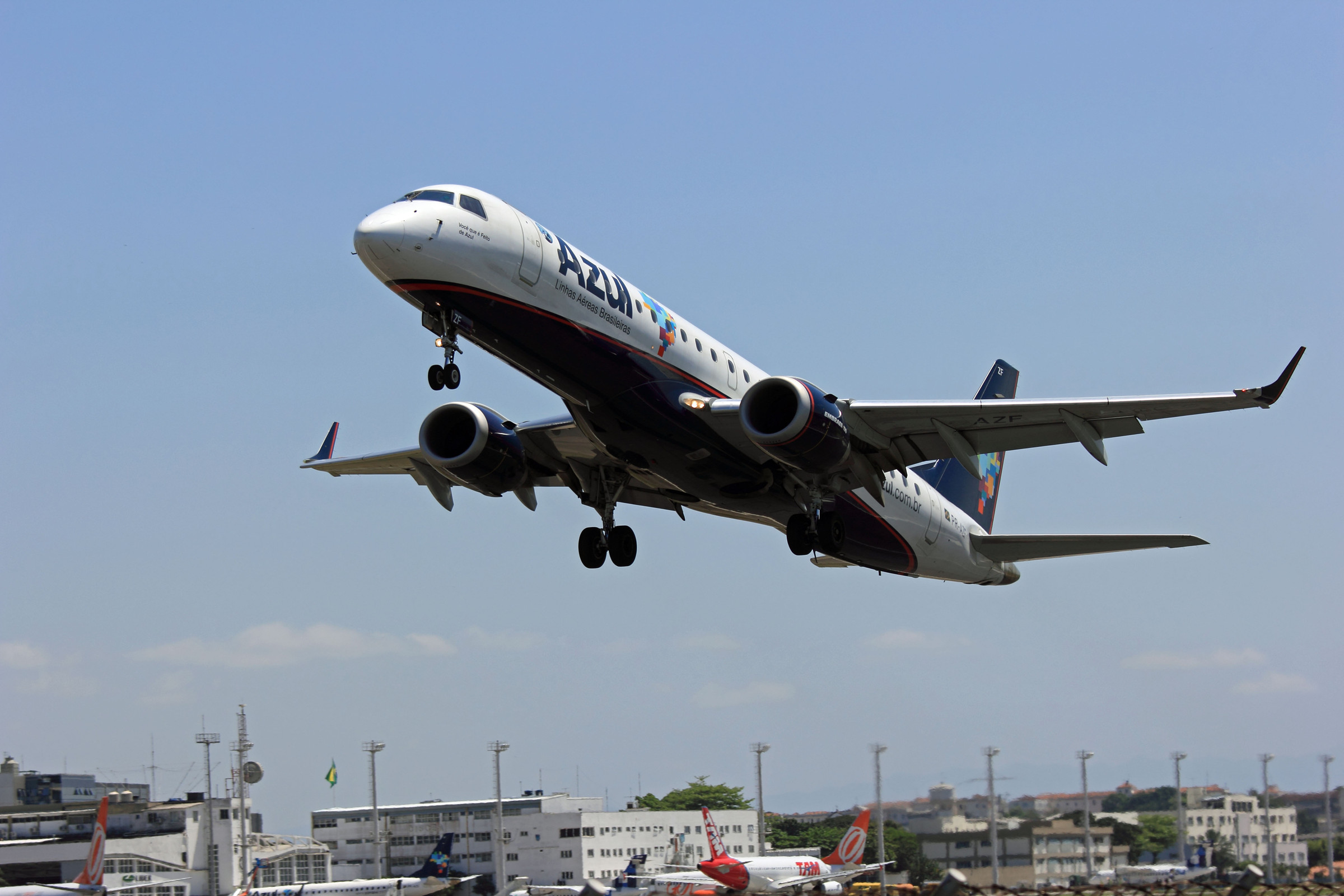
On 12 September 2019, Azul became the launch operator of the E195-E2. The first aircraft was delivered to lessor AerCap for operation by the airline, an arrangement that separated ownership from the daily work of flying it. Azul selected a 136-seat single-class cabin and planned to use the type on domestic and international services. It had 51 firm E195-E2 orders at the time. Neeleman presented the aircraft as the next stage of a fleet transformation after a decade in which the original E195 had helped the company enter new Brazilian markets. The choice preserved the familiar two-by-two passenger layout while adding capacity and the operating improvements of the new generation.<sup class="citation"><a href="/sources/#source-107">107</a></sup> Growth did not spare Azul a financial restructuring. On 20 February 2026, the company announced its emergence from Chapter 11 in the United States, after a process lasting less than nine months. It reported a reduction of approximately $2.5 billion in debt and lease obligations. Agreements involved bondholders, major lessor AerCap and strategic investors United and American. Azul said it had continued operating roughly 800 flights a day during the process. AerCap, which had delivered Azul’s first E195-E2, was now among the counterparties renegotiating the obligations attached to the fleet.<sup class="citation"><a href="/sources/#source-108">108</a></sup> Seven months later, on 2 September, Embraer celebrated its 2,000th E-Jet delivery as Azul received its fiftieth E2. Chief executive John Rodgerson traced the relationship back to Azul’s first flight, flown by E190 PR-AZL on 15 December 2008. Embraer said that more than 140 E-Jets had passed through Azul’s operation since its beginning.109
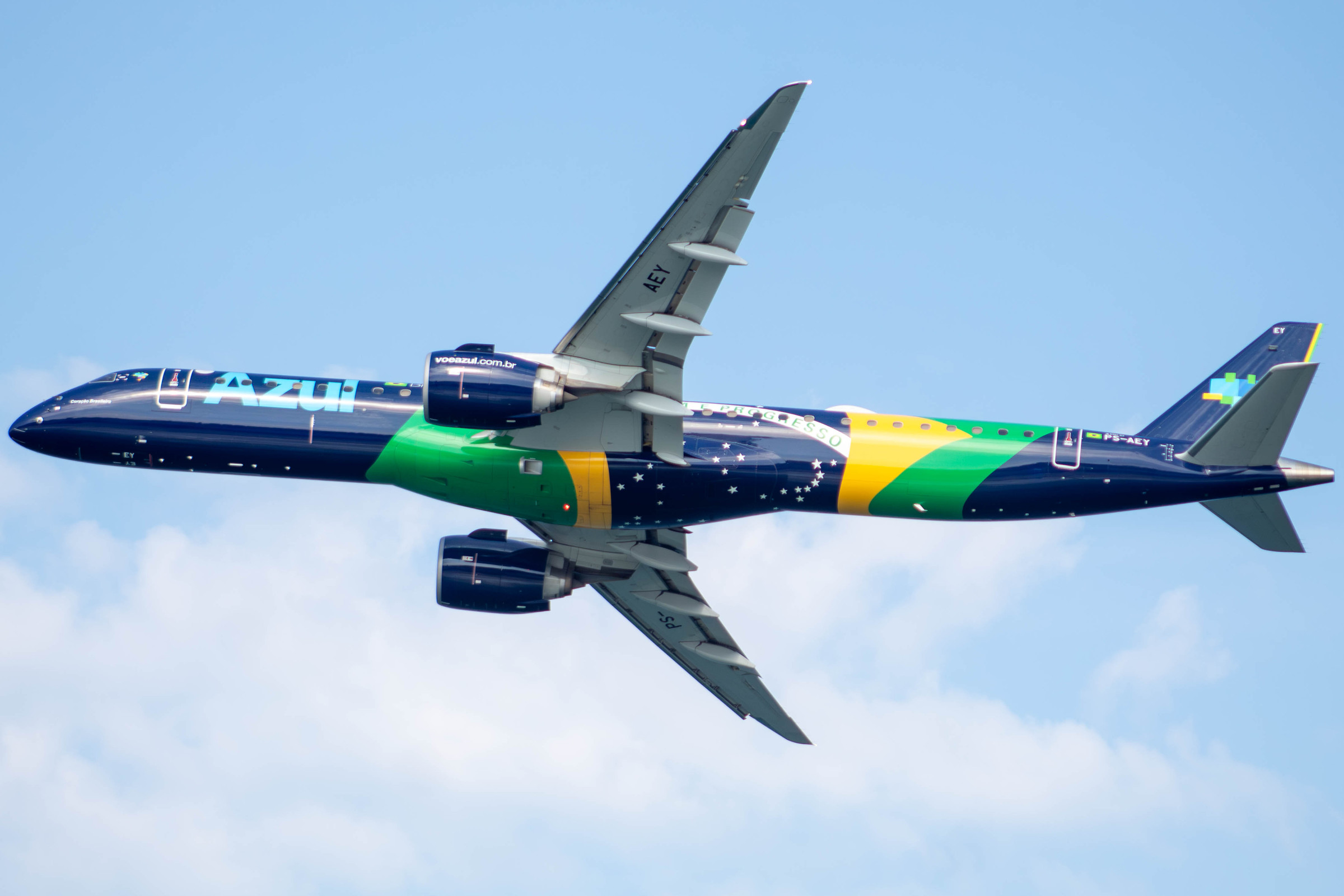
credit]
LATAM’s decision in September 2025 opened another route into the home market. The group ordered 24 E195-E2s and took 50 purchase options, with deliveries initially intended for LATAM Airlines Brazil from the second half of 2026. Its existing 362-aircraft fleet was overwhelmingly composed of Airbus narrowbodies and Boeing widebodies and freighters. Chief executive Roberto Alvo linked the smaller jets to further domestic and regional connections, including destinations that could extend the reach of the group’s hubs. The commitment gave Embraer a customer with a different starting point from Azul: an already extensive network seeking a new capacity category. The contract committed LATAM to 24 aircraft and preserved the option to add another fifty as the network developed.<sup class="citation"><a href="/sources/#source-110">110</a></sup> On 8 October 2026, LATAM and Embraer celebrated the start of the first E195-E2 delivery process. The airline planned to deploy its first fourteen aircraft on 42 routes, including new destinations such as Cabo Frio, Ji-Paraná, Macaé and Rondonópolis. Its release placed the initial operating rollout between November 2026 and March 2027, after customs, cabin approvals and completion of the required operating-certification work. LATAM expected another twelve deliveries in 2027 and was assessing as many as eighteen further destinations for the type.111