From the CF34 to the geared turbofan
Engines, installation and service experience The first CF34-8E ran in November 2000, more than a year before the E170 took to the air. FAA engine certification followed in April 2002. GE’s eventual production specification placed the engine in the 14,500-pound thrust class, with a 46.2-inch fan and a bypass ratio of five to one. That maximum thrust figure included automatic power reserve and referred to an uninstalled engine at sea level, flat-rated to thirty degrees Celsius. The propulsion system had been adapted specifically to the E170/175’s underwing position, including access to replaceable equipment for maintenance. Its development sequence ran alongside the airframe programme: ground testing, flight on the new aircraft, engine approval and then the aircraft’s entry into service in March 2004.
The CF34-10E for the larger jets demanded a separate development campaign. By June 2003, GE was preparing to start a flying-testbed programme on its Boeing 747 the following month. The engine combined a wide-chord fan, an aerodynamically advanced compressor and electronic controls drawing on the CF34-8 programme. JetBlue’s order for a hundred E190s provided a major commercial commitment while that engineering work continued. GE valued the firm engine order at more than US$600 million. The airline’s aircraft would depend on the more powerful propulsion branch reaching production as the E190 itself progressed through assembly and flight testing. The engine order therefore arrived before either product was ready for airline service.51
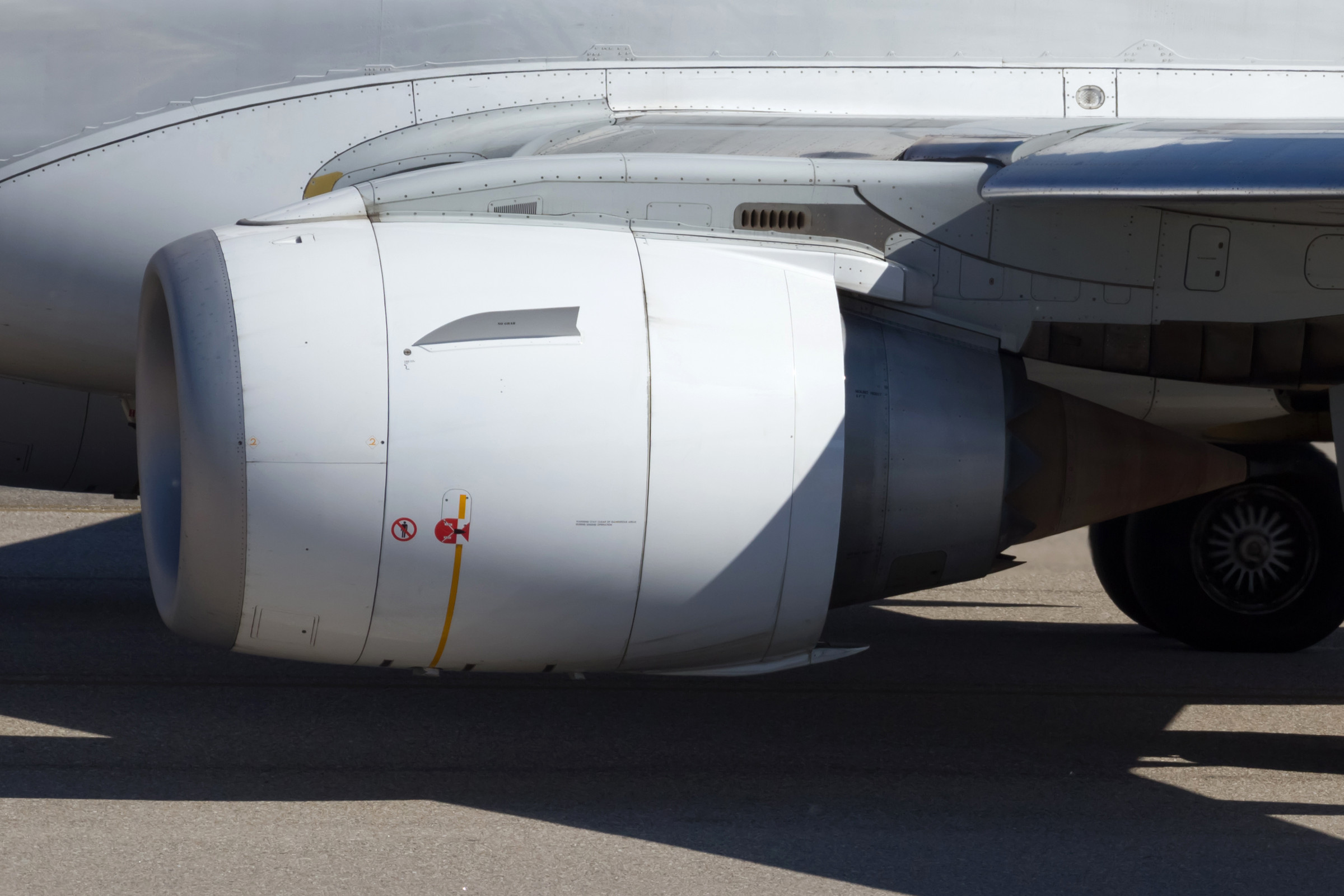
In its completed form, the CF34-10E had a fifty-three-inch fan and a bypass ratio of 5.4 to one. GE quoted maximum takeoff thrust with automatic power reserve at 20,360 pounds under the same uninstalled sea-level, thirty-degree conditions used for the smaller engine’s rating. The published engine weight was 3,700 pounds. GE supplied the larger aircraft’s complete propulsion package, including nacelle, thrust reverser and installation equipment. The -10E first ran in the third quarter of 2002, obtained FAA engine certification in the second quarter of 2004 and entered service in the third quarter of 2005. The E190 and E195 carried an engine with more thrust and a larger fan, developed around the higher payload and range demands of those airframes.<sup class="citation"><a href="/sources/#source-52">52</a></sup> The nacelle also formed part of the aircraft’s performance. On the E170 and E175, Safran’s MHD nacelle used acoustic composite panels and a fixed inner structure made from carbon composite. A cascade thrust reverser redirected airflow to assist deceleration after landing. The outer shape had to guide the flow around the engine, while acoustic treatment reduced noise and the structure contained the equipment needed for the installation. These functions occupied the same assembly visible beneath the wing. The engine’s published thrust described only one part of the propulsion system carried by the aircraft; its nacelle added the aerodynamic shape, sound treatment and braking function used in daily operation.<sup class="citation"><a href="/sources/#source-53">53</a></sup> For the E2, Pratt & Whitney’s geared architecture changed the relationship between the fan and the machinery driving it. A reduction gearbox allowed the fan to turn more slowly while the low-pressure compressor and turbine ran faster. Each could operate nearer its preferred speed. The arrangement supported a lower fan pressure ratio and a higher bypass ratio, moving a larger share of the engine’s airflow around the core. MTU’s involvement in the PW1900G amounted to a fifteen per cent programme share, with work in the high-pressure compressor, high-speed low-pressure turbine and seals. The new engine therefore involved both a different mechanical architecture and another international production partnership, with its own components, suppliers and maintenance requirements.<sup class="citation"><a href="/sources/#source-54">54</a></sup> Pratt & Whitney’s PW1900G specification lists a seventy-three-inch fan and a bypass ratio of 12.5 to one, marketed in the 19,000–23,000-pound thrust class. Its listed individual ratings extend to 23,815 pounds. Its published engine weight is 4,800 pounds. The fan was substantially wider than the CF34-10E’s, making the revised landing gear and underwing installation integral to the change. The same PW1900G family powered both the E190-E2 and E195-E2, while the proposed E175-E2 used the separate PW1700G. The larger two aircraft gained a propulsion system whose dimensions and airflow differed markedly from those of their predecessors, even though the passenger cabin retained its familiar four-abreast arrangement.55
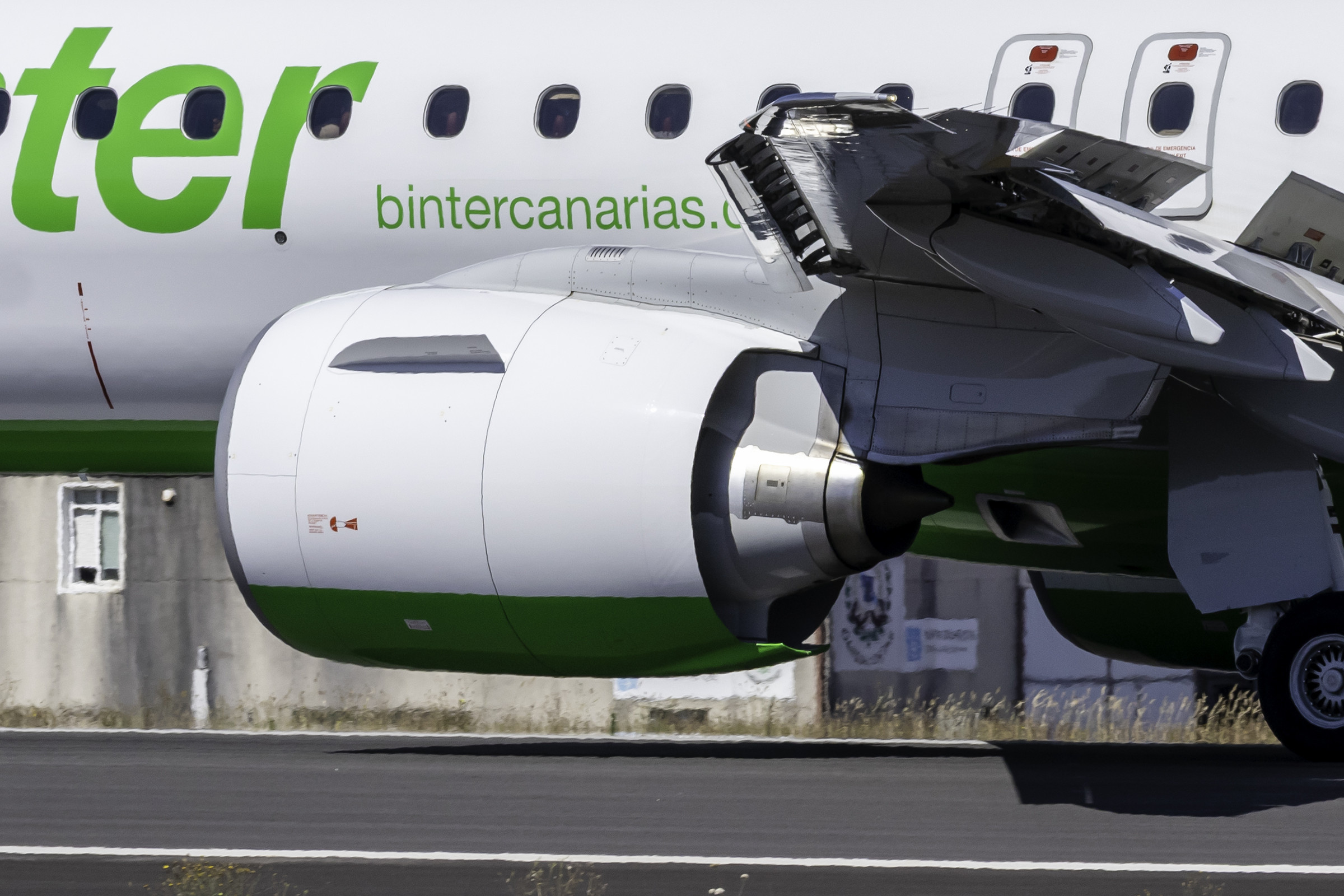
By May 2017, Pratt & Whitney announced FAA certification of the PW1900G after a test programme lasting nearly eighteen months. Work included sea-level, performance and operability testing. Five E2 flight-test aircraft were then using the engine, with more than nine hundred flight hours accumulated. The E190-E2 had first flown a year earlier, and the E195-E2 had joined the campaign in March. Engine qualification and airframe testing had progressed together, bringing the new propulsion installation towards its first passenger flights in 2018.<sup class="citation"><a href="/sources/#source-56">56</a></sup> Service subsequently brought additional inspection requirements. FAA directive 2025-04-13, effective on 8 April 2025, covered specified PW1900G models fitted with a particular seventh-stage high-pressure-compressor rotor, part number 30G5307. The action followed analysis of a rotor failure in a PW1127GA-JM, a different GTF model, and extended to the relevant hardware used in the PW1500G and PW1900G families. It required repeated angled ultrasonic inspections and replacement when a crack indication was found, with timing dependent on part exposure, serial-number applicability and accumulated cycles. For the E2, the affected model list comprised PW1919G, PW1921G, PW1922G, PW1923G and PW1923G-A engines with that rotor. Inspection requirements followed rotor configuration and maintenance status. Inspections, removals and replacement parts became part of the continuing support work needed to keep the new propulsion system available to airlines. 57