The original E-Jets
The E170 flew for the first time on 19 February 2002. During the following months, the flight-test fleet grew rapidly: a second aircraft flew in April, a third in May, a fourth in June and a fifth in July. By the end of the year, six pre-series aircraft were flying, with two further airframes assigned to ground structural tests. One of the flying aircraft appeared at the Regional Airline Association convention in Nashville; another went to Farnborough and continued on demonstration flights to nine European capitals. Embraer had to develop the aircraft while making it familiar to prospective customers. At the Faria Lima plant, the first serial-production E170 was already on the assembly line before the year closed. The E175 had completed detailed design, while work on the larger aircraft remained at earlier stages. The E170 production line would have to operate while the other three models were still being developed.
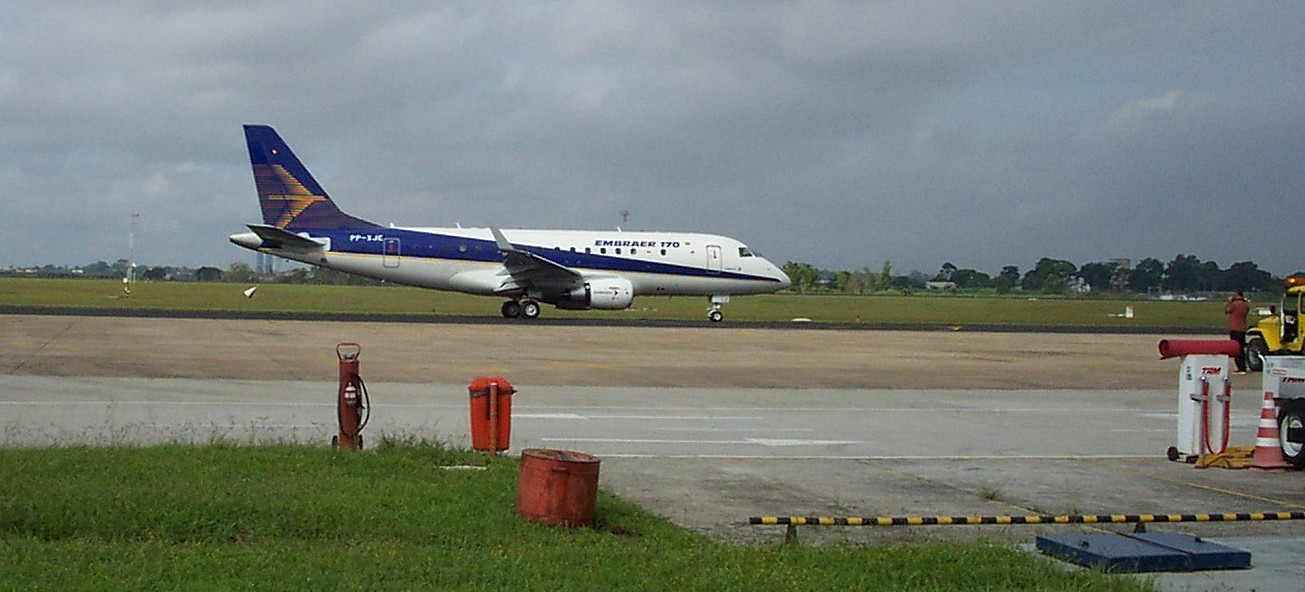
credit]
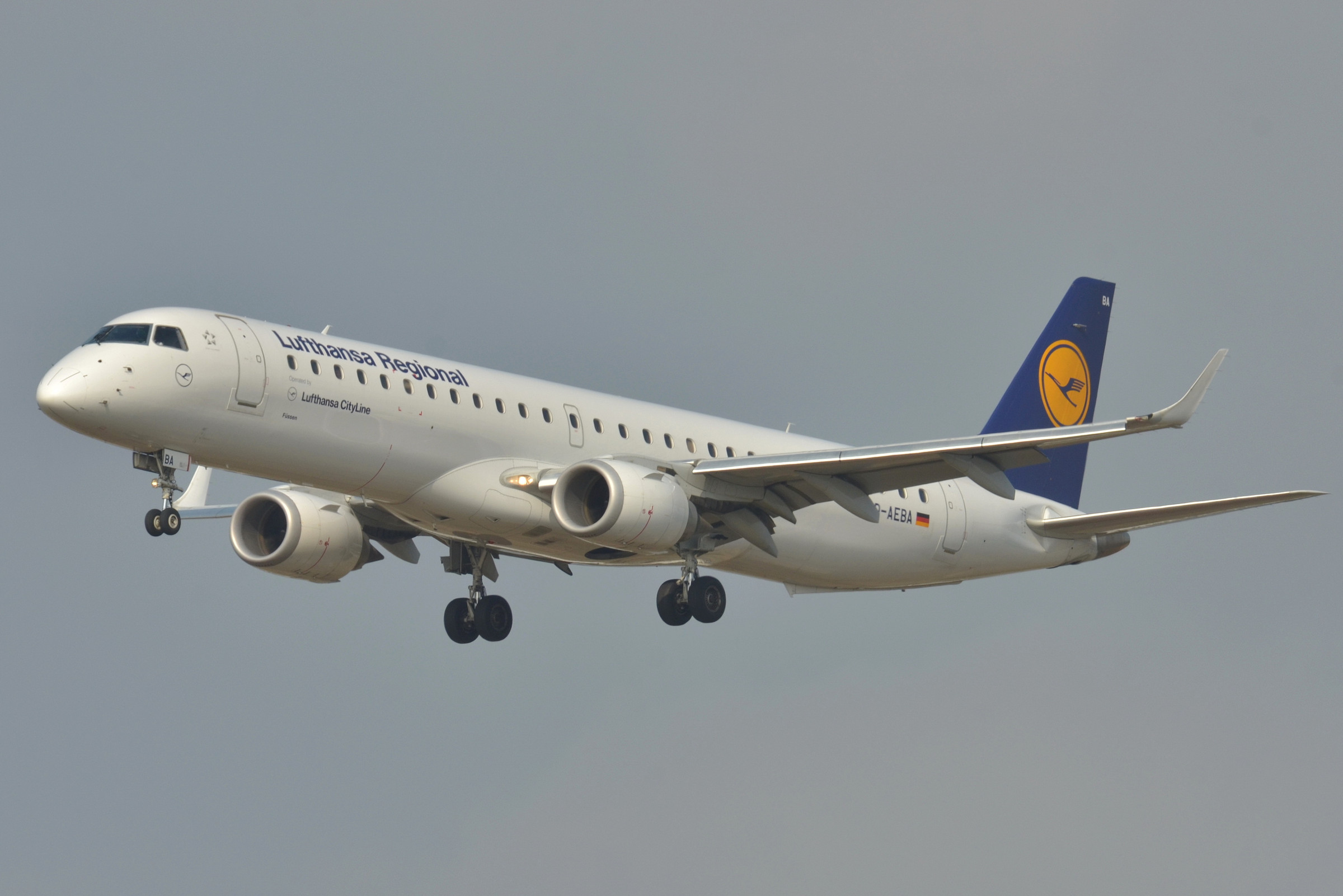
The E175 joined the flying fleet in June 2003, followed by a second example in August. The first E190 fuselage was completed in October. These advances took place while the E170’s certification campaign continued beyond the schedule Embraer had originally expected. Brazil’s Aerospace Technical Center issued provisional approval in November 2003; the FAA followed in December. These approvals permitted preparations such as crew training and route testing, but did not authorise the commercial deliveries for which Embraer and its customers were waiting. The company acknowledged that the result fell below its expectations and postponed the first deliveries until final certification. By then, seven aircraft had participated in the E170 campaign. Final approval was now expected in February 2004.<sup class="citation"><a href="/sources/#source-30">30</a></sup> Some of the work required changes to the aircraft itself. The FAA examined the E170’s electrical generation and distribution in detail because the new fly-by-wire controls depended on those supplies. Reviews with Embraer, its systems partners and the Brazilian authority led to alterations in electrical and flight-control design. Automatic escape slides were also new to an Embraer aircraft of this kind; FAA personnel travelled to Brazil to witness evacuation testing. The agency scrutinised the primary ice-detection system after concerns had arisen over related technology elsewhere. Honeywell’s integrated avionics brought another extensive review, covering system safety, software, integration testing and flight evaluation. The American certificate, issued on 20 February 2004, followed this concentrated examination of the new systems. The reviews had continued alongside the Brazilian certification work and the flight-test campaign.<sup class="citation"><a href="/sources/#source-31">31</a></sup> While that process continued, the larger wing arrived. On 9 October 2003, Kawasaki announced that its Brazilian subsidiary would ship the first E190/195 wings the next day. Kawasaki Aeronáutica do Brasil had been established in April 2002, and its assembly plant had started work a year later. For the smaller E170/175, Kawasaki supplied the centre-wing section and moving surfaces including flaps, ailerons and spoilers. The E190/195 contract added the wing box, giving the Japanese company responsibility for development and manufacture of the complete wing. The completed assemblies could now travel to Embraer for attachment to the aircraft. The longer fuselages were consequently supported by a different wing and a dedicated production arrangement, even as the family retained extensive common systems. By the autumn of 2003, the first larger airframe and its major aerodynamic structure were ready to meet.<sup class="citation"><a href="/sources/#source-32">32</a></sup> The Brazilian E170 approval had arrived on 19 February 2004, followed by European approval the next day. The E175 followed its own path: Brazilian certification on 22 December 2004 and European approval on 7 January 2005. Under the formal type designations, both belonged to the ERJ 170 family. Their outward proportions were close, with fuselage lengths of 29.90 and 31.68 metres and the original 26-metre span. The longer aircraft gave airlines room to add seats while retaining the smaller wing and CF34-8E propulsion branch.33
The E190 rolled out in February 2004 at a ceremony attended by Brazil’s president, Luiz Inácio Lula da Silva. It first flew in March and appeared at Farnborough in July. The E195 made its maiden flight in December, bringing the fourth member into the air while E170 deliveries were already under way. Embraer had to maintain the production flow of the first model while assembling test aircraft for the larger two. Its 2004 annual report put investment in the family at US$1 billion. The original US$850 million estimate had belonged to the programme before this expansion into flying prototypes, certification work and serial production. The E190 campaign was now aimed at service entry in the third quarter of 2005, with the E195 following in 2006.34
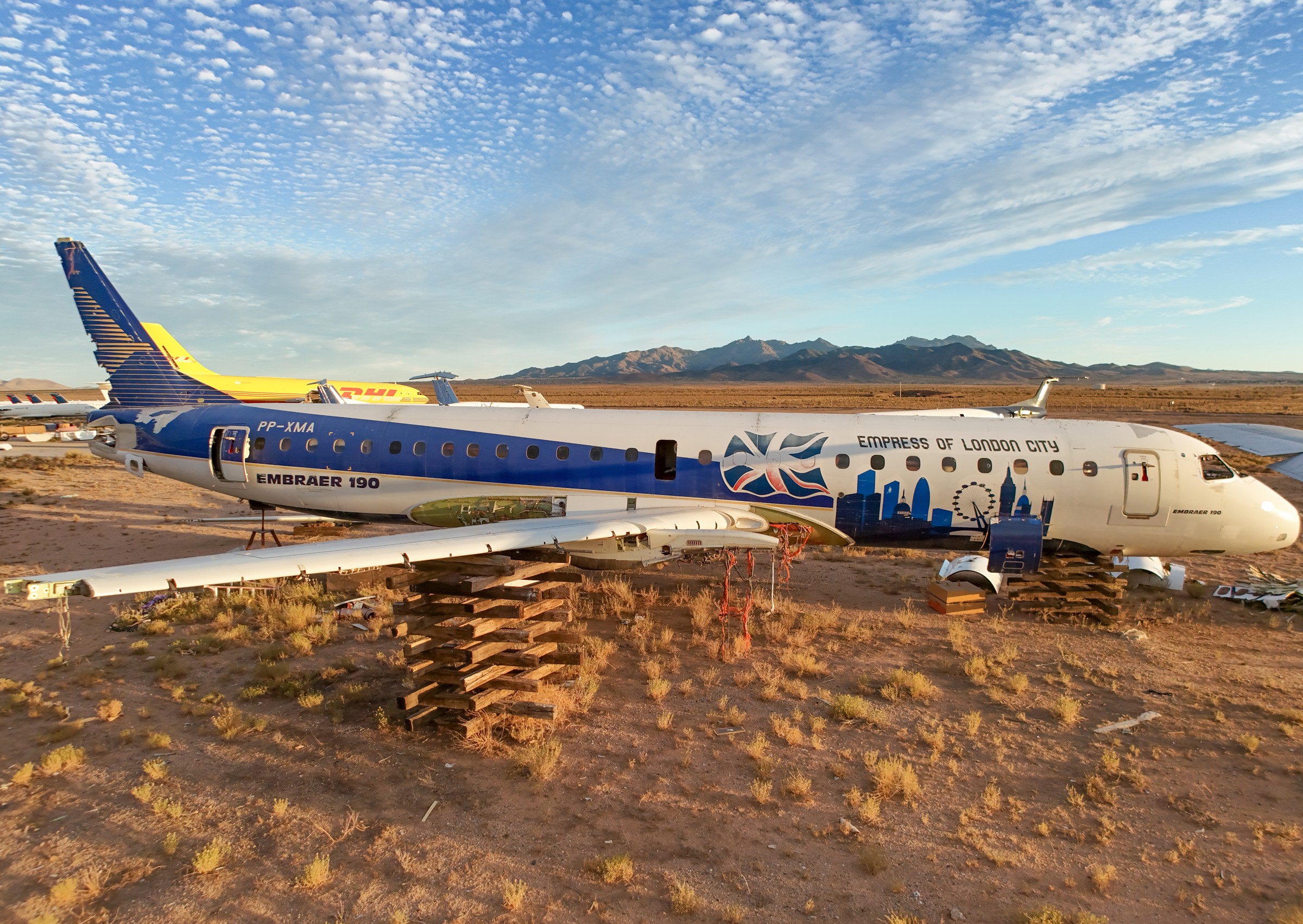
credit]
The larger pair followed during 2005 and 2006. The E190 obtained Brazilian certification on 30 August 2005; the E195 followed on 30 June 2006. European approvals came on 30 June and 17 July 2006 respectively. Both used the 28.72-metre wing, while fuselage length increased from 36.24 metres on the E190 to 38.66 metres on the E195. They were certified as the ERJ 190-100 and ERJ 190-200.<sup class="citation"><a href="/sources/#source-35">35</a></sup> Embraer reported that the time to produce an E170 fell from about seven months at the beginning of production in March 2004 to roughly 4.1 months by the end of 2005. The company expanded facilities and coordinated capacity with its risk-sharing partners, while using Gavião Peixoto for flight testing. The expanded facilities had to handle E170 production alongside the larger aircraft still undergoing development and testing.<sup class="citation"><a href="/sources/#source-24">24</a></sup> The first E-Jets had been delivered on 8 March 2004. A decade later, Embraer could look back on more than a thousand deliveries, having handed over the thousandth aircraft in 2013. The transition had taken the company from a prototype programme into a continuous stream of aircraft entering different airlines and operating environments. Four sizes now shared the E-Jet name, and their accumulated flying would become a substantial source of information for the next generation.36